
Right-size calculations, not guesses
We match the unit to your bathrooms, fixtures, and how you actually use hot water, then confirm the home can support the fuel type and venting requirements.
Serving Dallas, Texas & surrounding areas
Mon–Fri 8am–6pm · Sat 9am–2pm
Get dependable hot water with a properly sized tankless system, installed to manufacturer specs and local code. We help you choose the right unit, confirm gas or electrical capacity, and finish the job cleanly.
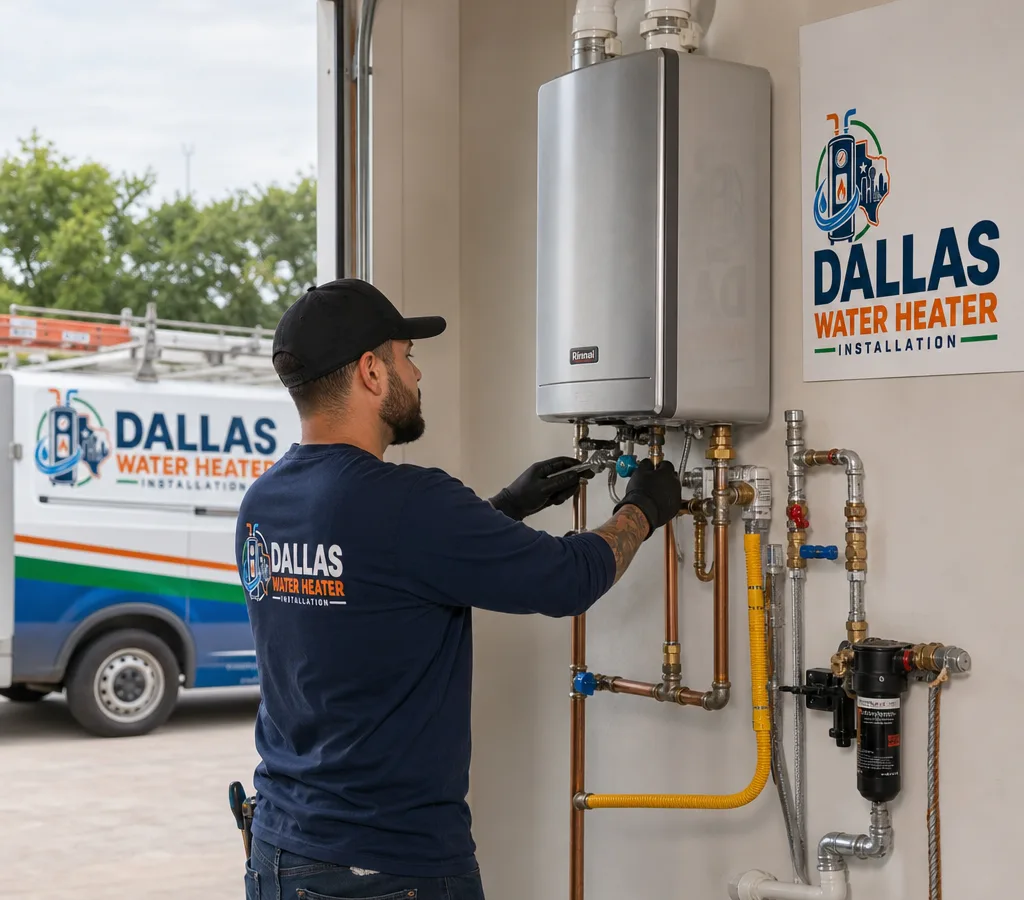
If you are shopping for a tankless water heater Dallas Texas homeowners can rely on, the main decision is not the brand name. It is whether the unit is sized correctly for your actual demand and whether the home can support the fuel type, venting, and water connections.
Dallas has a wide mix of housing, from older neighborhoods with tighter mechanical closets to newer builds with attic equipment and long hot water runs. In areas like Lake Highlands and Casa View, we often see older gas piping layouts that need a careful load check before a high-BTU tankless goes in. In Uptown condos and townhomes, vent routing and access can be the limiting factor, so the installation plan matters as much as the heater selection. In North Dallas, larger homes and multiple bathrooms make flow-rate planning and recirculation options a common conversation.
Dallas Water Heater Installation handles end-to-end tankless work: new installs, replacements, and upgrades from tank-style heaters. When the job calls for it, we also plan the supporting details that make the system reliable, like service valves for future descaling, correct vent materials, and a clean condensate route on condensing units.
Most buyers start with a simple question: gas or electric. The right answer depends on your home's utility setup, your hot water demand, and what it takes to install the unit safely.
Gas tankless: Many Dallas homes already have natural gas available, and gas units are common when you need higher hot-water output. Installation planning usually includes verifying gas line size and total connected load, confirming venting type and routing, and setting up isolation/service valves so the unit can be maintained.
Electric tankless: Electric units can be a fit in some situations, but they often require significant electrical capacity. Before recommending electric, we look at the panel capacity and the number of circuits required, and we make sure the plan is practical for your property.
Either way, proper sizing is the difference between “endless hot water” and a system that struggles during simultaneous use. For tankless water heaters Dallas homeowners use daily, we size to real-world fixtures, expected simultaneous demand, and incoming water temperature changes across the year.
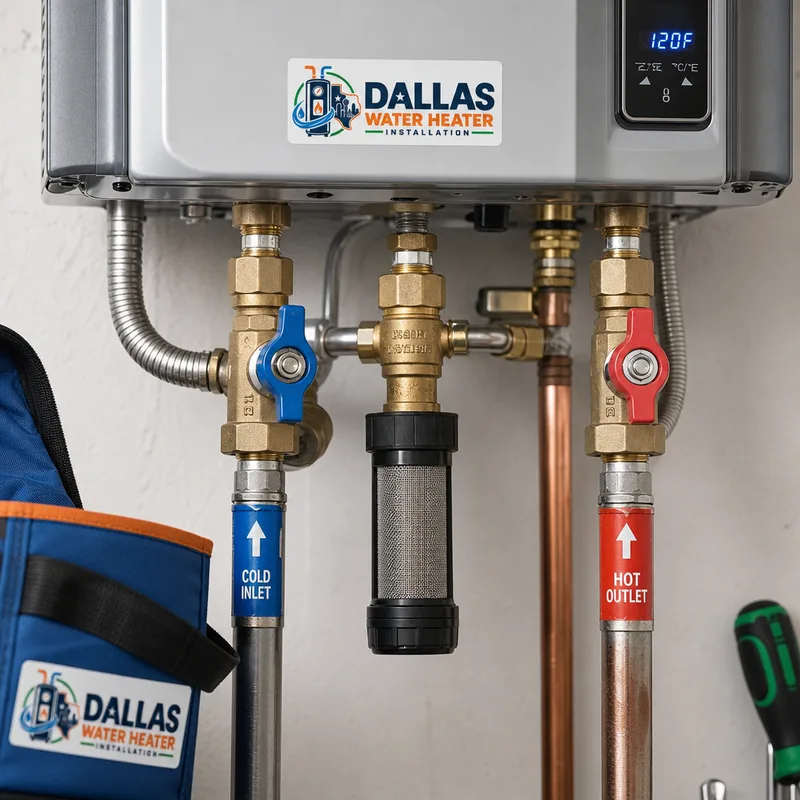
We match the unit to your bathrooms, fixtures, and how you actually use hot water, then confirm the home can support the fuel type and venting requirements.
Tankless installs depend on correct vent materials, clearances, and safe gas or electrical connections. We follow manufacturer requirements and local inspection expectations.
A tankless heater should be installed so it can be descaled and serviced. We plan valve placement and access so maintenance is straightforward.
If you are switching from a storage tank, we adapt plumbing, venting, and mounting so the upgrade looks tidy and works reliably.
If long pipe runs make you wait for hot water, we can talk through recirculation approaches that fit your layout and budget.
Tankless water heater installation in Dallas typically ranges from about $2,500 to $6,500+, depending on whether it is a like-for-like replacement or a conversion from a tank unit with new venting and gas or electrical upgrades. A straightforward replacement with existing venting and minimal repiping often lands on the lower end, while longer vent runs, upgraded gas line sizing, condensate routing for condensing units, or electrical work can push the price higher.
Your final cost depends on unit capacity, fuel type, venting route, access, permit and inspection needs, and how much of the existing plumbing must be reworked. We confirm the exact scope and price after an on-site evaluation of your home's utilities and installation location.
Book Your InspectionFrom evaluating utilities to explaining maintenance, each step is planned around safe operation and dependable hot-water delivery.
Book Your InspectionWe check your current heater, fuel source, venting route, water line sizes, and the installation location. Then we size the tankless unit for your demand and layout.
You get a clear plan for the heater model and capacity, what needs to change—venting, gas line, electrical, or plumbing—and what will stay as-is.
We safely disconnect the old unit, protect the work area, and prepare mounting and connections so the new installation is neat and serviceable.
We connect water, gas or power, and venting, then test for safe operation, correct temperature control, and stable hot-water delivery at fixtures.
We show you how to operate the unit, what error codes mean in plain terms, and what routine service looks like so performance stays consistent.
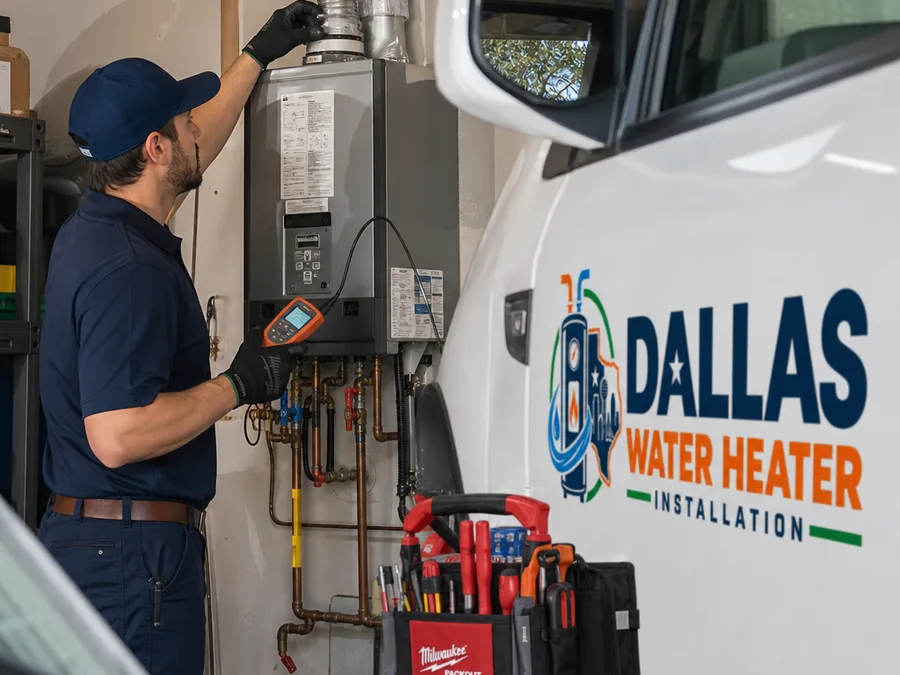
A Dallas tankless water heater can last a long time, but reliability depends on installation quality and maintenance. We are often brought in for:
Many issues trace back to venting, gas supply, condensate handling, or scale buildup.
This can come from incorrect sizing, a restricted inlet screen, mixing-valve issues, or a unit that is not set up for your plumbing layout.
In larger Dallas homes with long pipe runs, you may need a recirculation strategy or plumbing changes, not a bigger heater.
Switching from a tank to tankless is not a simple swap. Venting changes, mounting, and gas-line sizing are frequent requirements.
If you are comparing options across your whole property, it can help to start with the big picture of water heater installation in Dallas so the tankless choice fits your home and your expectations.
Book Your InspectionWe replaced an older tankless unit and the new install looks cleaner than the original. They explained the venting change and the service valves, tested everything, and the hot water is steady even when two showers run.
Mia R.
Our old tank heater failed and we wanted to upgrade to tankless. The crew walked us through gas line sizing and where the vent would go, then finished the job in a day with a clear walkthrough at the end.
Jordan T.
Sometimes, yes, because many gas tankless units need higher BTU input than a typical tank-style heater. The deciding factors are the existing pipe size, the run length, and what else is on the gas system, such as a furnace, range, or fireplace. We check the existing setup on-site before recommending a unit.
Yes, but it is rarely a direct swap. A conversion often involves a new vent route, different water-connection layout, mounting changes, and sometimes gas or electrical upgrades. We treat it as a planned retrofit so the system is safe, serviceable, and sized correctly.
A tankless unit can often go in a garage, utility room, or another suitable mechanical location, as long as venting, clearances, and service access are practical. For some townhomes and condos, routing the vent and maintaining access drive the placement decision more than the heater size.
Yes. Tankless units should be maintained periodically, and a key part is descaling when mineral buildup is present. That is why we install isolation and service valves and plan access, so routine maintenance can be done without tearing into walls or disconnecting the unit.
Many replacements can be completed in a single day, while conversions from a tank heater can take longer if venting and utility upgrades are needed. After an on-site evaluation, we can give a realistic timeline based on access, vent routing, and any required upgrades.
The right size depends on how many fixtures may run at once and the flow rates of showers, tubs, and appliances, plus incoming water temperature. We size the unit to your actual usage pattern so you do not pay for more heater than you need or end up undersized during peak demand.
Tell us what you have now and what you want to improve. Dallas Water Heater Installation will confirm sizing, fuel and venting requirements, and provide a written scope so you can move forward with confidence.